Membrane-Assisted Phase-Change Heat Sink
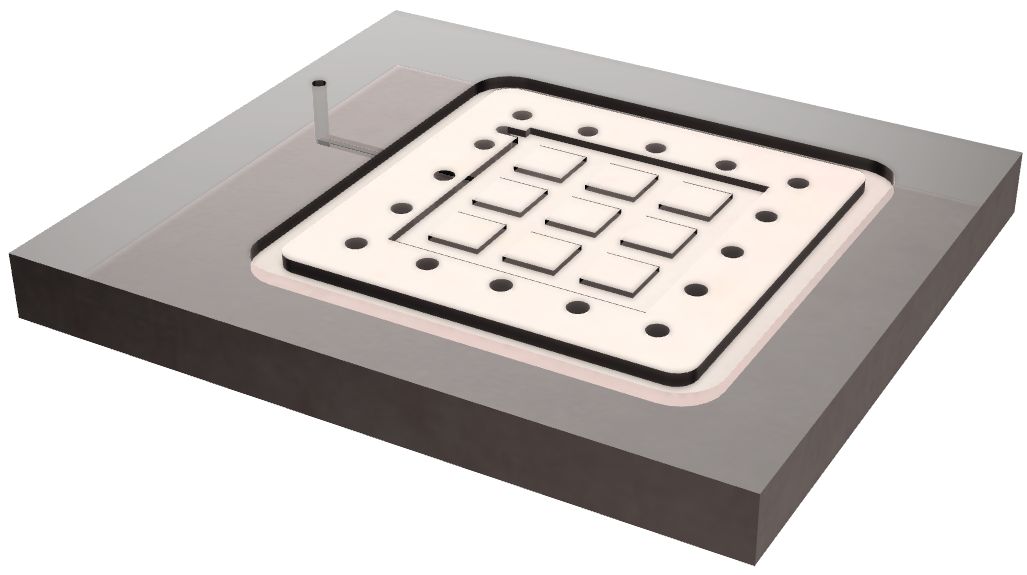
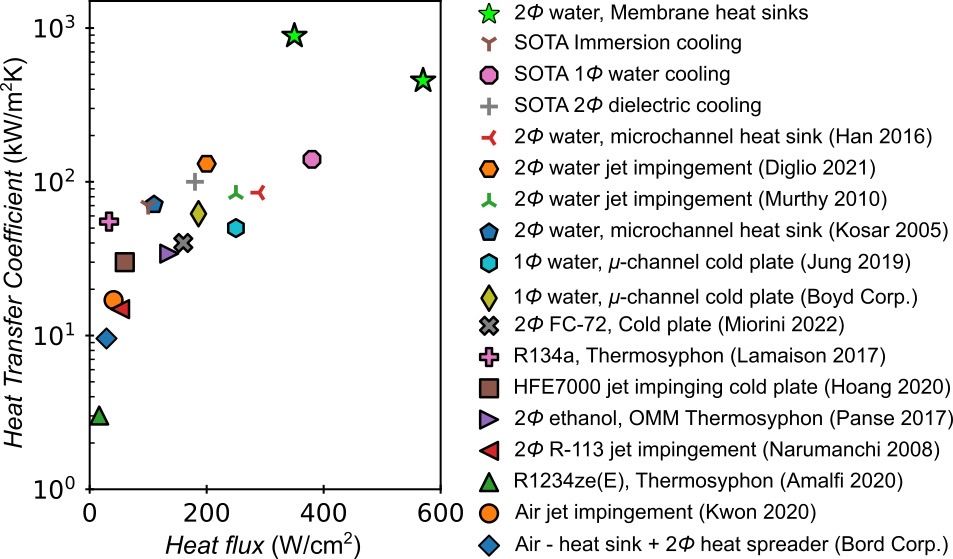
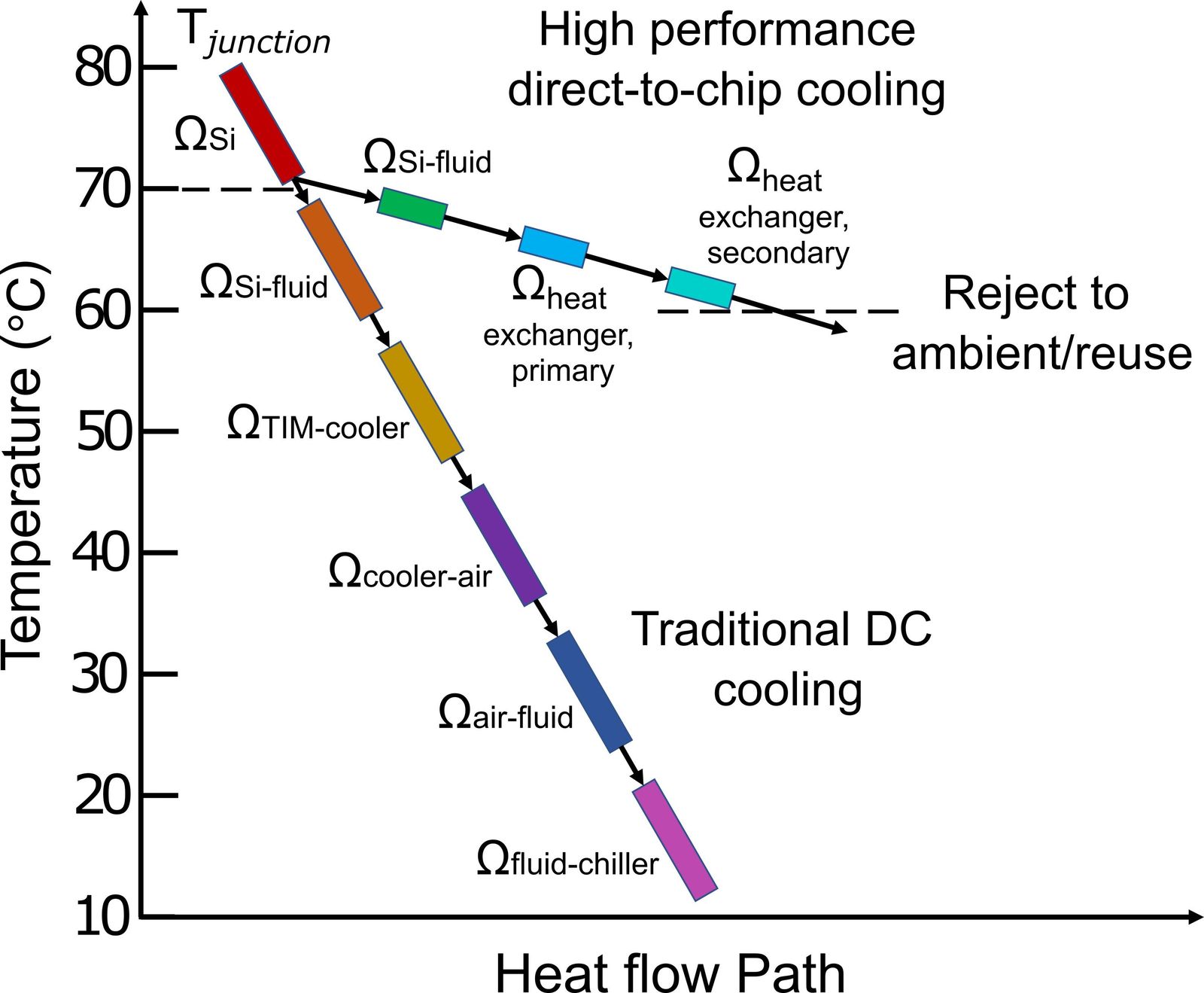
Data centers spend a staggering share of their energy budget just moving heat, and conventional two-phase heat sinks are limited by unstable boiling. This project introduced a new cooling architecture: a porous membrane positioned above the heater surface that separates liquid and vapor paths and stabilizes two-phase flow. The result is heat fluxes up to 2 kW/cm², heat transfer coefficients up to 1.8 MW/m²K, and a 10x reduction in thermal resistance over state-of-the-art heat sinks. As a postdoc, I led a team of five graduate students and a postdoctoral researcher advancing the technology from a lab proof-of-concept (TRL 3) to a system demonstrator (TRL 6), including scalable packaging processes and techno-economic analyses for data center deployment.